
Designing a system that understands biology, not files
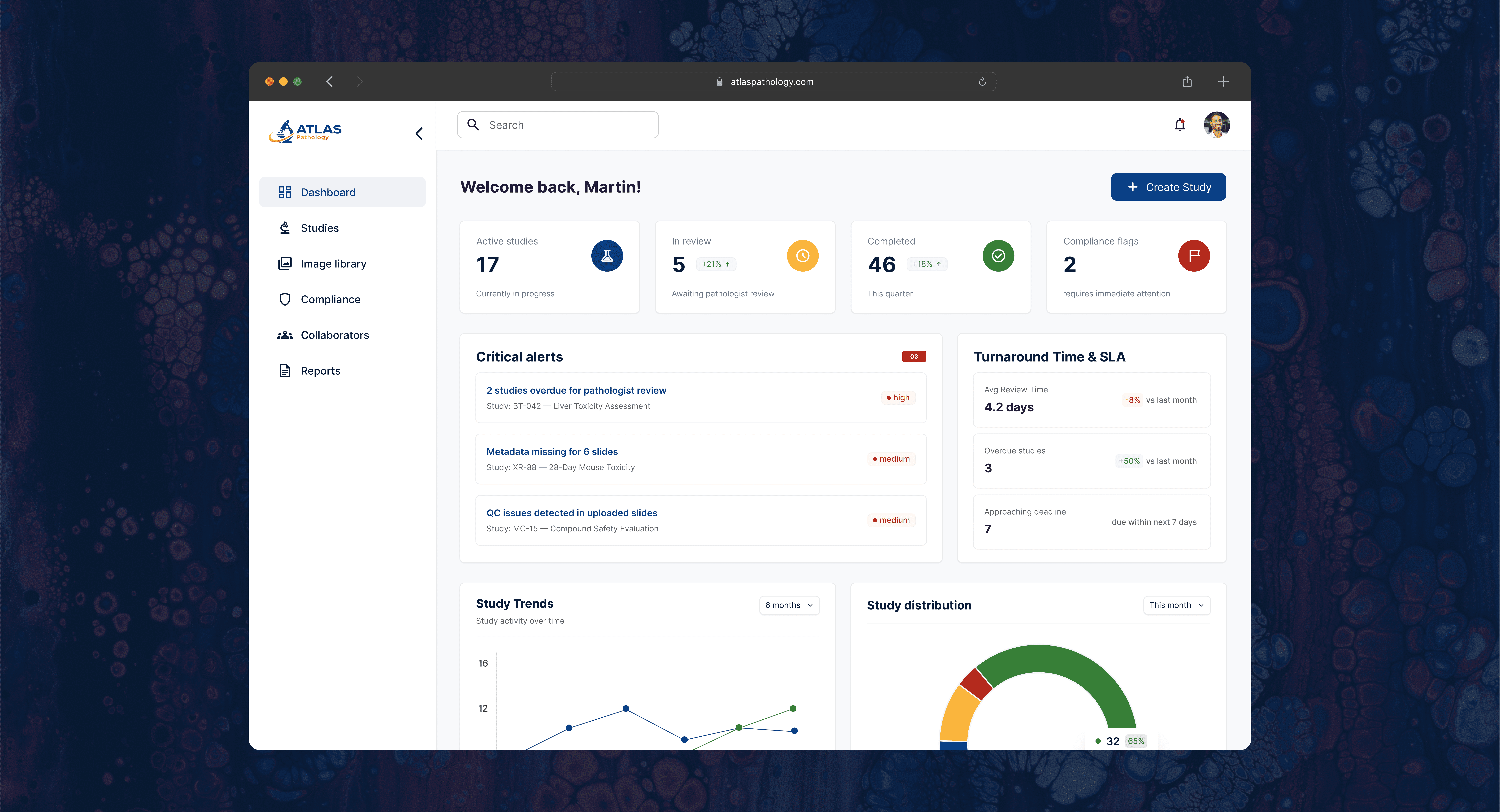
ATLAS Pathology is a digital pathology and image-analysis platform serving preclinical research and life sciences organizations operating under GLP and FDA 21 CFR Part 11 requirements.
The company’s mission is to help labs reduce turnaround time, improve data integrity, and scale pathology workflows, by embedding AI-assisted analysis into compliant, end-to-end systems rather than selling standalone AI algorithms.
THE CLIENT
Atlas Pathology (live commercial product, name changed under NDA)
ROLE
Founding Product Designer
Industry
8 months
Scope of work
Enterprise SaaS
Life Sciences
Web App Tool
When I joined ATLAS as the first Product Designer, the product was live but much of the real work still happened in spreadsheets. Teams used the system to view slides, but relied on Excel to map studies, track metadata, and hold biological context together.
Working closely with product, engineering, and QA, I stepped back to understand where the system ended and where users were forced to compensate.
That gap shaped everything that followed.
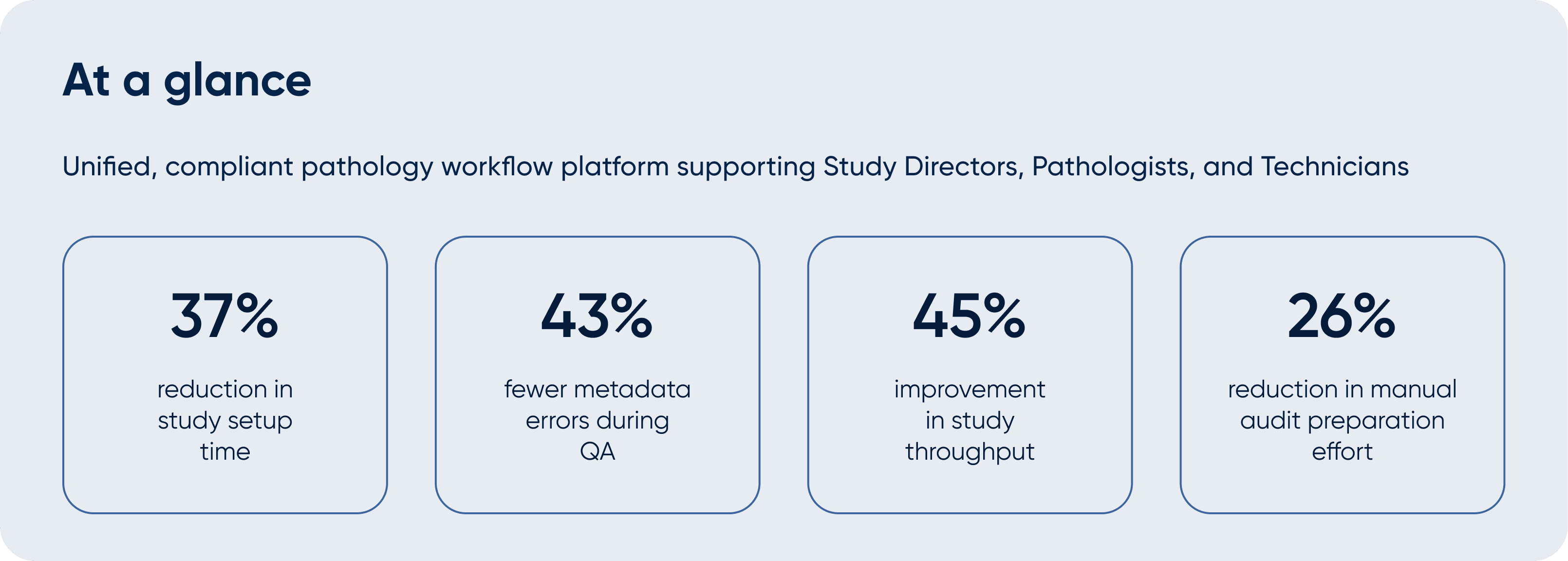
One Study, 2,000 Slides & "Zero" Connection!
A single pathology study spans animals, tissues, dose groups, and outcomes. But, in most pathology labs, reviewing a single study required juggling between:
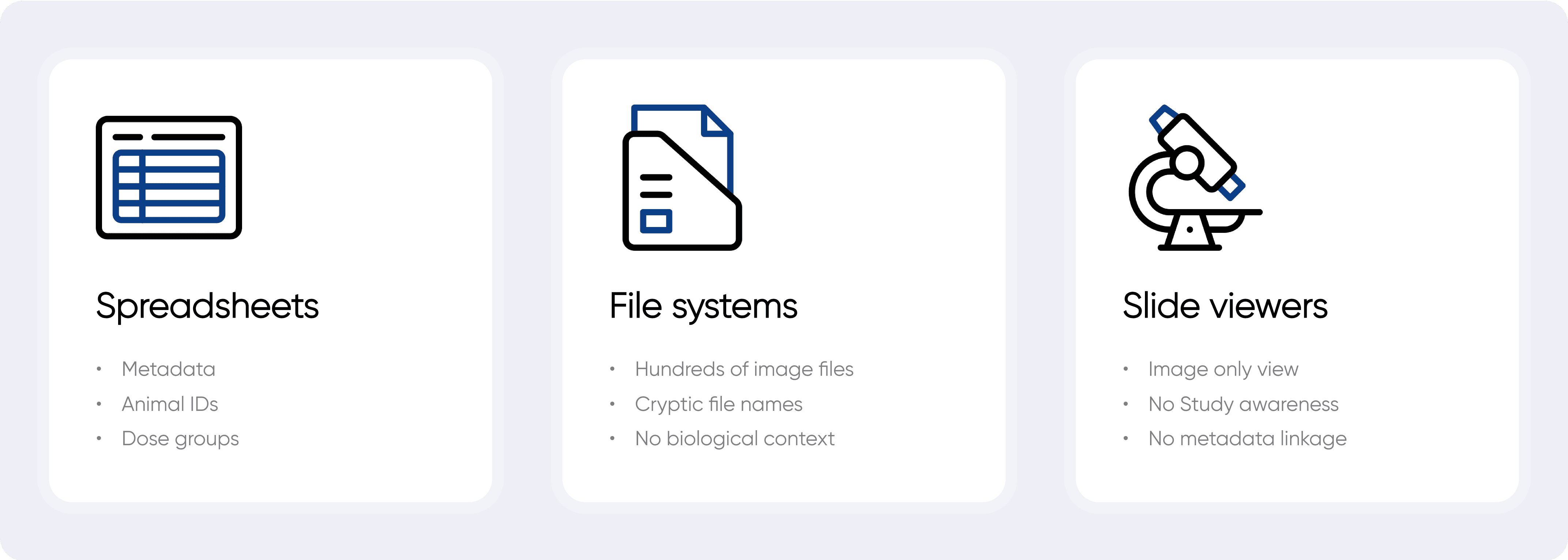
Nothing is “broken,” but everything is fragile.
Technicians manually map slides.
Pathologists cross-check metadata.
Study Directors prepare for audits long before they happen.
The system works until scale turns small mistakes into real risk.
After walking through real studies with technicians, pathologists, and study directors, one thing became obvious.
People weren’t struggling because they lacked tools. They were struggling because the system forced them to stitch meaning together themselves.
Every step required mental reconstruction. That’s when the real problem clicked.

Reframed the challenge
Once we named the problem, the design questions changed immediately:

Designing for context, end to end
Make studies visible, not spreadsheets

Instead of asking technicians to map thousands of slides in Excel, we designed a visual study setup flow structured around biology.
Barcode ranges became tangible batches.
Biological groupings became drop zones.
Errors were prevented before they could happen.
Let compliance work quietly
Rather than pulling users out of their flow with confirmations, I treated compliance as infrastructure.
Audit logs ran continuously in the background.
Governance lived in a dedicated compliance view.
Operational work stayed focused and uninterrupted.
Keep humans in control of AI
Pathologists didn’t want automation. They wanted understanding. So AI was designed as transparent decision support layer that assists pathologists without replacing clinical judgment.
Confidence indicators replaced absolute predictions.
Visual overlays made AI reasoning inspectable.
Pathologists could confirm, question, or override findings at any point.
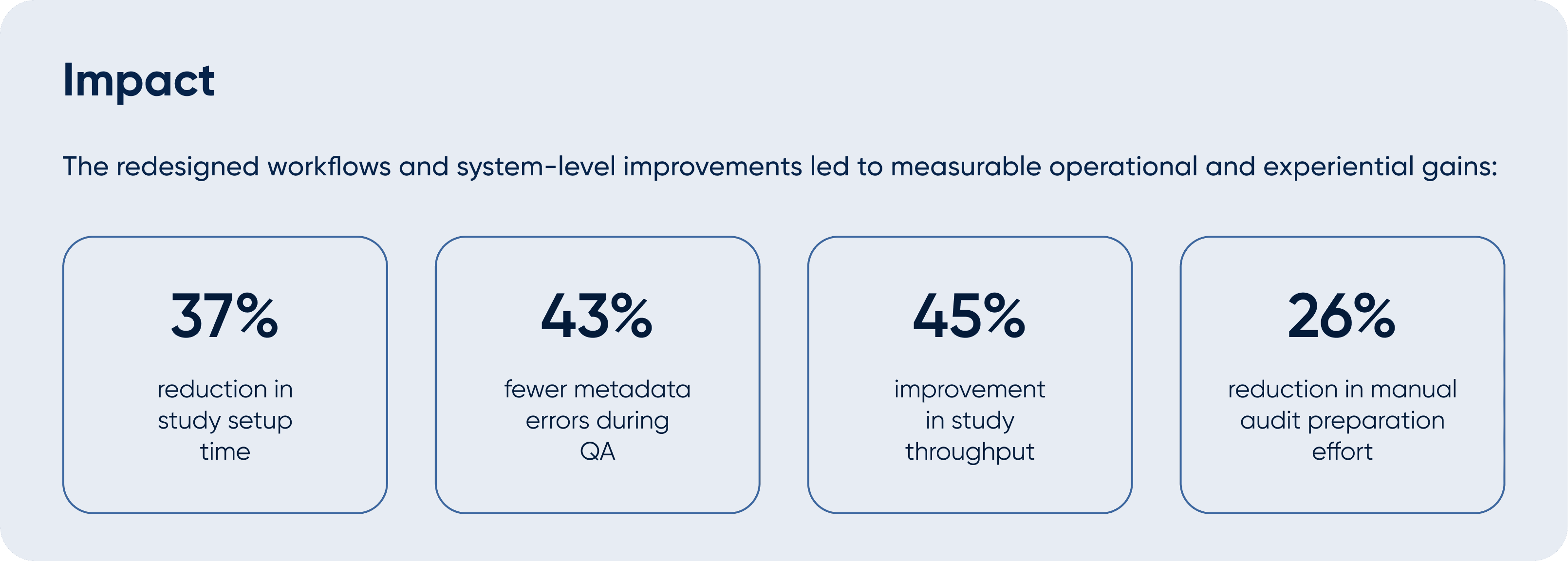
Reflections & Learnings
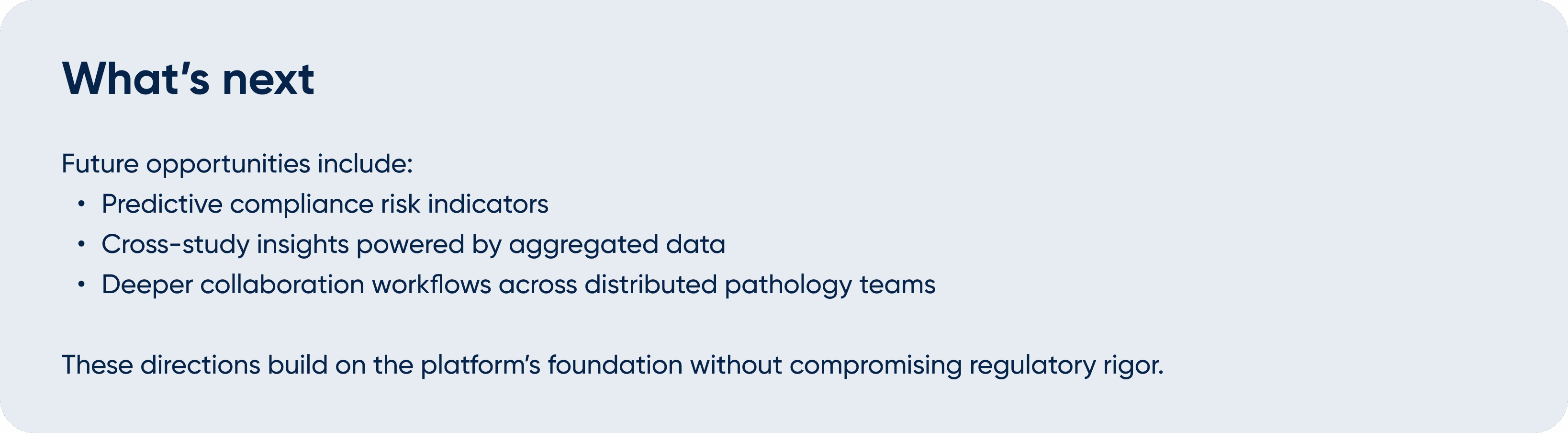
This project reinforced the importance of sequencing in complex systems addressing foundational workflow, data integrity, and compliance challenges before introducing advanced capabilities like AI.
Designing for regulated environments required balancing usability with accountability, and ensuring that trust was built into the system rather than added on top.
Enterprise Saas
In development
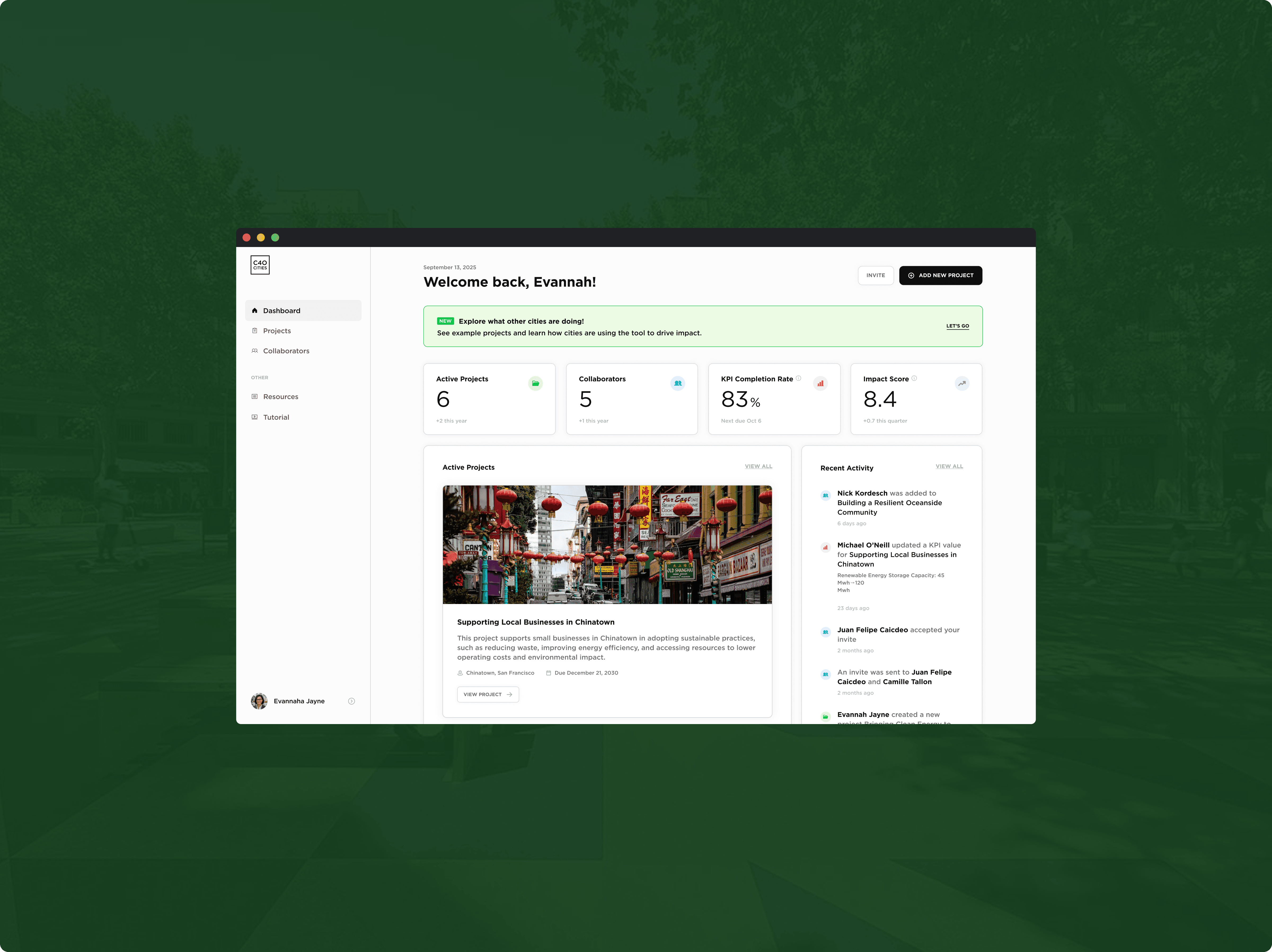
C40 Cities: Green & Thriving Neighborhoods Tool
Mobile App
Shipped